Uzbek Ethnic Group
Introduction
The Uzbek ethnic group in China represents a small yet significant group, primarily concentrated in the Xinjiang Uygur autonomous region. This group is distinguished by its rich cultural heritage, which reflects a blend of traditional Uzbek customs and the influences of the diverse ethnic landscape of China. Uzbeks in China maintain distinct cultural practices while contributing to the broader multicultural tapestry of the region. Despite their relatively small numbers, they have preserved their unique linguistic, musical, and culinary traditions, which continue to thrive within their communities. The Uzbek ethnic group in China exemplifies the broader theme of cultural diversity and integration within the nation.
History
The history of the Uzbek ethnic group in China is intricately tied to the historical movements and interactions along the Silk Road. Over centuries, migrations and trade along the Silk Road brought Uzbek communities into what is now modern-day China. Today, the Uzbek community continues to maintain its cultural distinctiveness while participating in the socio-economic life of Xinjiang Uygur autonomous region and beyond.
Language
In China, the Uzbek language is primarily spoken within the community, serving as a vital means of preserving cultural heritage and fostering communication. Educational initiatives in certain areas aim to preserve and promote the Uzbek language alongside Mandarin, ensuring that future generations remain connected to their linguistic roots. The language is not only a tool for daily communication but also a vessel for transmitting folklore, literature, and oral traditions that are central to the Uzbek cultural legacy.
Culture
The culture of the Uzbek ethnic group in China is a vibrant tapestry woven from traditional customs and the influences of their geographical surroundings. Their cultural expressions are rich and varied, encompassing traditional clothing, cuisine, music, and dance.
Traditional Clothing
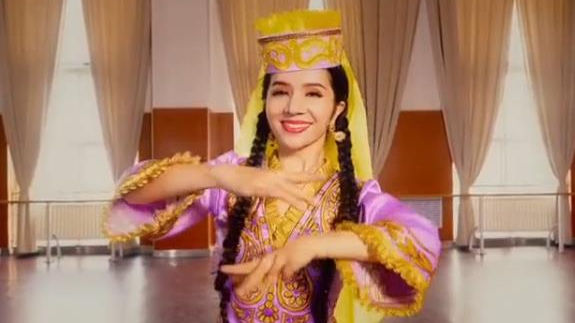
Traditional Uzbek clothing is a significant aspect of their cultural identity, featuring vibrant colors and intricate patterns. Traditional attire for men often includes a robe-like garment called a "chapan" and a skullcap known as a "doppa", which is adorned with detailed embroidery. Women typically wear long, flowing dresses with colorful headscarves. These garments are not only practical but also reflect the aesthetic sensibilities of the Uzbek community, with designs often carrying symbolic meanings or representing regional affiliations. Traditional clothing is especially prominent during cultural festivals, weddings, and religious celebrations, where it serves as a symbol of cultural pride and continuity.
Cuisine
Uzbek cuisine is renowned for its hearty and flavorful dishes, which are a staple of community gatherings and celebrations. The most famous dish is plov, a rice pilaf cooked with meat, carrots, and spices, reflecting the culinary influences of Central Asia. Uzbeks also enjoy a variety of breads, known as naan and noodle dishes, such as lagman, which highlight the region's agricultural bounty. Meals are often shared with family and friends, embodying the spirit of hospitality and communal living. Traditional cooking methods and recipes are passed down through generations, ensuring that the culinary heritage remains a vital part of Uzbek identity in China.
Music and Dance
Music and dance are central to Uzbek cultural expression, with traditional performances often featuring at community events and celebrations. The Larzon dance is particularly popular, characterized by its energetic movements that mimic the sounds of nature and express emotions of love and happiness. Traditional Uzbek instruments, including the "dutar" (a two-stringed lute) and the "doira" (a frame drum), accompany these dances, creating a lively and engaging atmosphere. The songs and dances serve not only as entertainment but also as a means of storytelling, preserving the history and traditions of the Uzbek people. Cultural festivals and events provide opportunities for the community to showcase their rich musical heritage and pass it on to younger generations.
Influence and Contributions
The Uzbek ethnic group in China has made notable contributions to the cultural and economic landscape of the regions in which they reside. Their influence is evident in various fields, including trade, agriculture, and the arts. Historically, Uzbeks played a vital role in facilitating trade along the Silk Road, contributing to the exchange of goods and ideas between East and West. In contemporary times, they continue to engage in trade and business activities, often leveraging their linguistic and cultural knowledge to foster cross-cultural connections. Agriculturally, Uzbek communities have contributed to the cultivation of unique crops and the introduction of traditional farming practices that enrich the local economy.
In the arts, the Uzbek community is celebrated for its vibrant music, dance, and craftsmanship, which have been integrated into the broader cultural milieu of Xinjiang Uygur autonomous region. Their artistic expressions serve as a bridge between cultures, promoting mutual appreciation and understanding. Additionally, the Uzbek diaspora in China is involved in educational and cultural exchange programs, enhancing the ties between China and Central Asia. Through these contributions, the Uzbek ethnic group enriches the multicultural fabric of China, highlighting the importance of diversity and intercultural dialogue.








